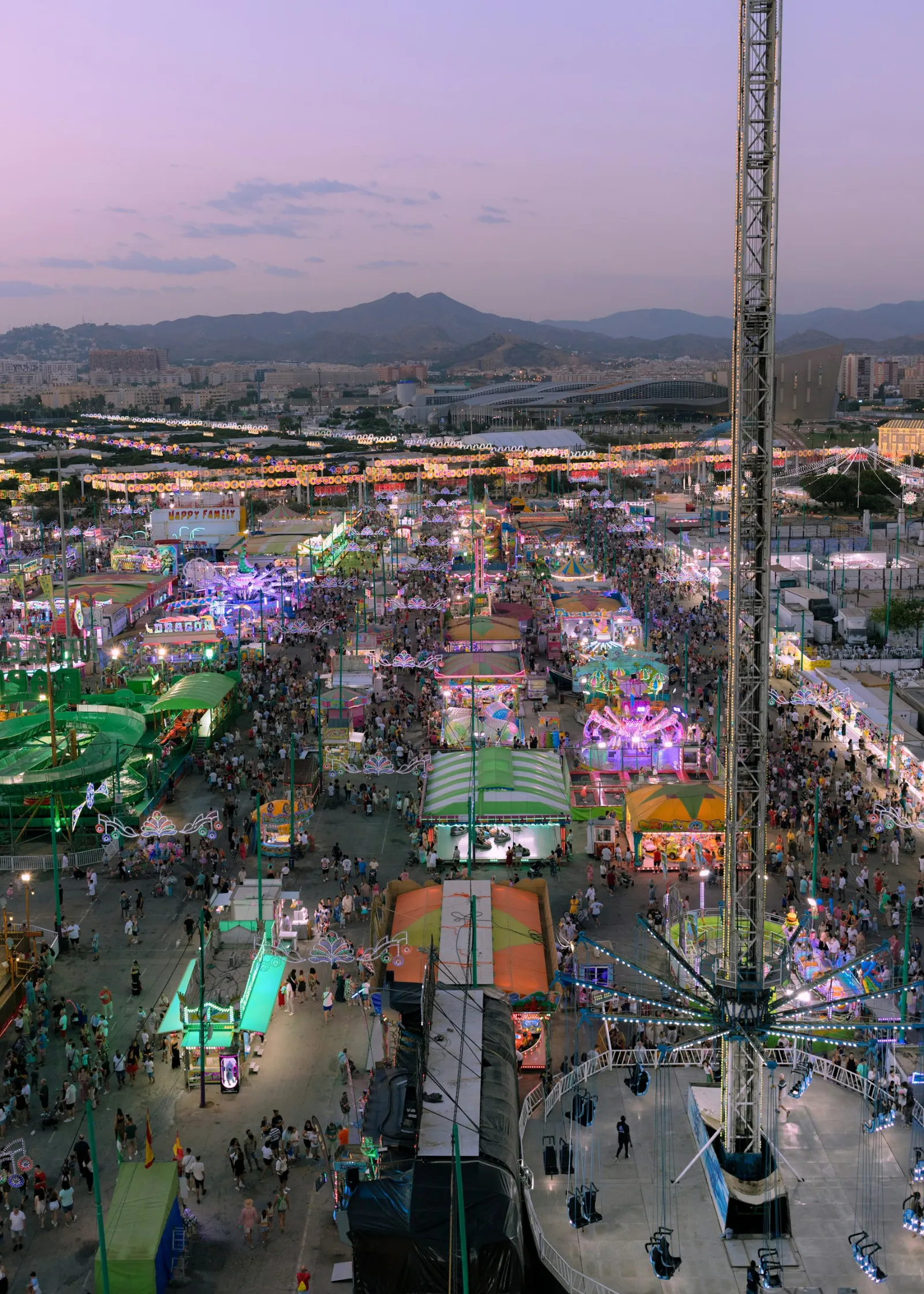
Drones support crowd control by giving event organisers, security teams and police a live aerial view of the whole site, so they can see crowd density building, queues forming, bottlenecks at exits, emergencies and traffic around the venue before problems escalate. Crowd safety guidance treats about 5 people per square metre as the upper limit for standing areas, and an overhead view is the fastest way to see where a crowd is approaching it. In France, police were cleared in 2023 to use camera drones to secure public gatherings ahead of the Paris 2024 Olympics.
This guide covers what drones show at events, crowd density, arrivals and traffic, emergencies, the rules and privacy, rogue drones and how to plan a drone monitoring operation.
Table of contents
What drones show at an event
| Task | What the drone shows | Who uses it |
|---|---|---|
| Crowd density | Where people are packing together, especially at stages, barriers and pinch points | Safety officer, event control |
| Entry and queues | Queue length and flow at gates and security checks | Operations and stewarding |
| Exits and routes | Blocked or overloaded exits and walkways | Safety officer, stewards |
| Incidents | Exact location of a fight, fall or medical emergency | Security, medical teams |
| Traffic and transport | Roads, car parks, shuttle stops and taxi ranks around the venue | Traffic management, police |
| Perimeter | Fence lines, gate breaches and crowds outside the site | Security |
| Debrief | Recorded footage of how the crowd moved through the day | Planning for next year |
Watching crowd density
Crowd disasters are usually caused by density, not panic: when too many people are packed into too little space, pressure builds and people can no longer move freely. Crowd safety expert Professor G. Keith Still describes 5 people per square metre as the upper limit for standing and viewing areas, and notes that UK event guidance typically plans capacity at 2 people per square metre.
From the ground, density is hard to judge. From above, it is obvious where the crowd is compressing, for example in front of the main stage, at a bar or toilet block, or where two flows meet. A drone feed lets event control open extra space, hold back arrivals or redirect people before an area becomes dangerous.
Arrivals, departures and traffic
Many crowd problems start outside the gates. Before and after a large event, a drone shows how roads, car parks, public transport stops and pedestrian routes are coping, so traffic and stewarding can be adjusted in real time. Our guide to traffic monitoring with drones covers this in more detail.
Emergencies and evacuation
Find the incident. An aerial view pinpoints exactly where help is needed in a dense crowd.
Guide responders. Event control can direct medical teams along the clearest route.
Check evacuation routes. If a site needs to be cleared, the drone shows which exits are flowing and which are blocked.
See at night. Thermal cameras show people in dark areas around the site. See our guide to drones for search and rescue.
For all-day coverage without battery swaps, a tethered drone powered from the ground can hold position over the site for hours.
Rules and privacy
In the EU, drones flown by or for the police, fire and rescue services in the public interest fall outside the EASA drone rules, and national rules apply instead. In France, a 2023 decree set out when police, customs and the military may use camera drones, including to secure gatherings that are likely to seriously disrupt public order.
Event organisers and security contractors follow the normal EASA rules. Drones must never fly over assemblies of people in the open category, so monitoring an event almost always needs the specific category, with an operational authorisation based on a SORA risk assessment. Large events often also have temporary airspace restrictions; check our no-fly zone guide and the EU drone regulations.
Footage of crowds is personal data under GDPR. Tell people that drones are in use, record only what you need, set short retention periods, restrict access to the footage and avoid identifying individuals unless the law clearly allows it.
Rogue drones at events
Unauthorised drones are a growing problem at big events. During the Paris 2024 Olympics, French authorities intercepted 53 drones near Olympic sites, although the interior minister said many were not flown with malicious intent. Event security plans should cover how to detect and respond to unauthorised drones; see our guide to counter-drone systems.
Planning drone crowd monitoring
Agree what event control needs to see. Stages, gates, exits, roads or the whole site, and at which times.
Choose positions. Plan where the drone will hover so it never flies over the crowd itself, and where it will launch and land.
Get permissions. Operational authorisation, any temporary airspace approvals and agreement with the event organiser and police.
Connect the feed. Live video to event control, with a clear radio link between the drone team and the safety officer.
Plan battery and crew rotation. Or use a tethered system for long shifts.
Set data rules. Who can see the footage, how long it is kept and how the public is informed.
Debrief. Use the footage to improve layouts and staffing for the next event.
Flyby Guys plans flights near large audiences regularly, for example as pilot in command of drone light shows such as Amsterdam's New Year show. Safety buffers between the drones and the crowd are agreed with organisers and authorities in advance. Read more in our guide to drone light shows.
Limitations
Weather. Strong wind, rain and fog can ground drones at outdoor events.
Flight time. Battery drones need rotation; tethered drones have limited positions.
Indoor venues. Arenas and halls need fixed cameras or specialist indoor systems.
People still decide. The drone gives the picture; stewards, safety officers and police make the calls.
Frequently asked questions
How are drones used for crowd control?
They give event control a live aerial view of crowd density, queues, exits, incidents and traffic, so problems can be spotted and managed early.
What crowd density is dangerous?
Crowd safety expert Professor G. Keith Still describes 5 people per square metre as the upper limit for standing areas. Event capacity is often planned at around 2 people per square metre.
Can drones fly over crowds?
Not in the EU open category, which bans flights over assemblies of people. Monitoring an event needs the specific category and an authorisation, and the drone is normally positioned beside the crowd rather than over it.
Can private security companies use drones at events?
Yes, if they follow the EASA rules, hold the right authorisation and handle footage in line with GDPR. Police and emergency services work under national rules.
How long can a drone monitor an event?
A battery drone flies for tens of minutes, so crews rotate drones. A tethered drone can stay up for hours.


