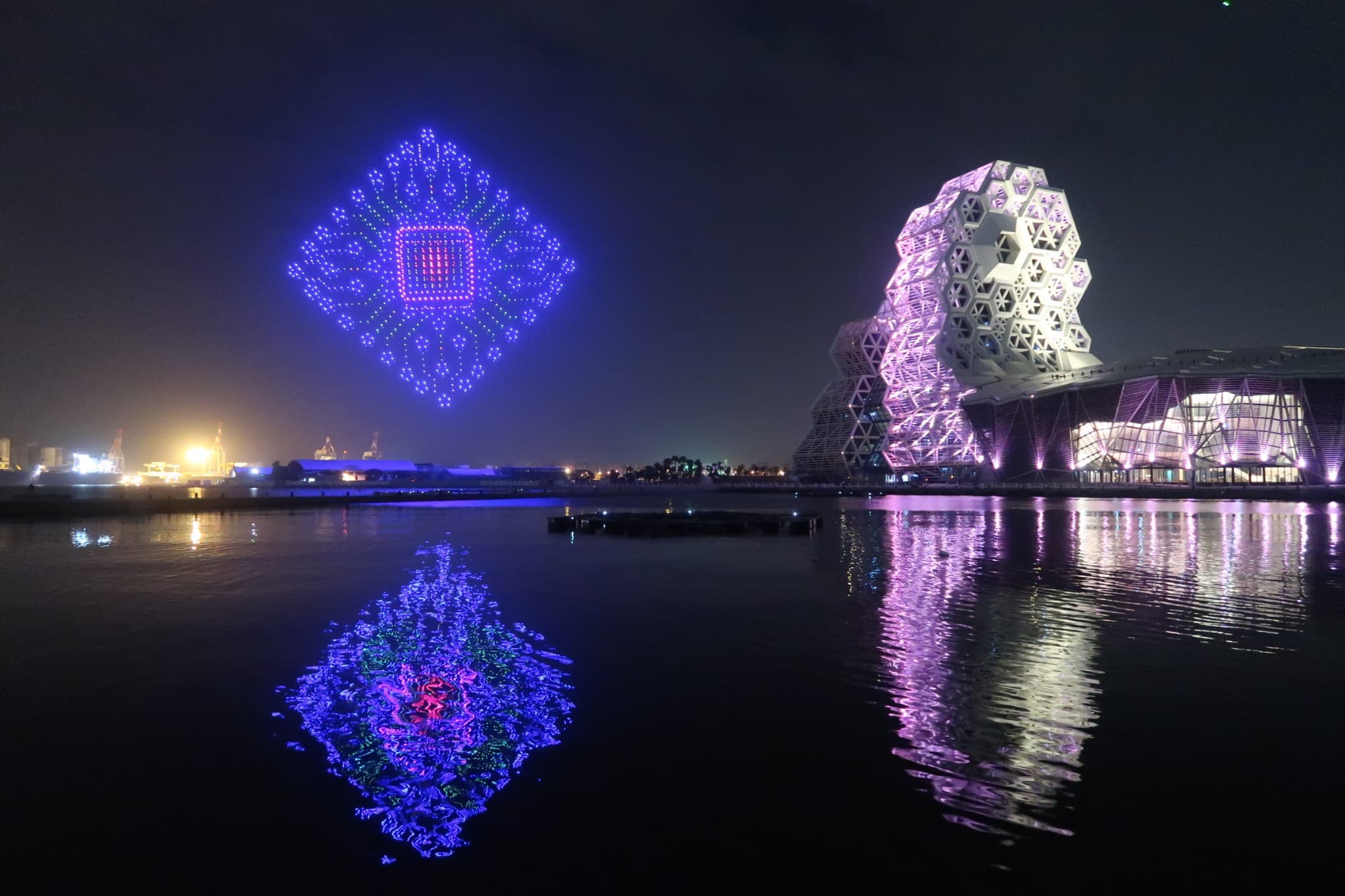
A drone light show is a fleet of LED-lit drones flying pre-programmed paths so that, together, they draw shapes, text and animations in the night sky. Each drone is one pixel. Shows typically use 100 to 1,500 drones, last 10 to 15 minutes, and in the US usually cost from about $20,000 for a small show to $200,000 or more for a large one. Every show needs an aviation authorisation, so planning starts months before the date.
Flyby Guys has flown light shows since December 2020, with more than 200 show flights in countries including Dubai, Togo, Indonesia and Taiwan. Our largest was the Taiwan Lantern Festival, with 1,500 drones. This guide explains how shows work, what they cost, the permits they need and how to plan one. Planning a show? See our drone light show service.
Table of contents
How drone light shows work
A show has three parts: the animation, the drones and the ground control system.
Animation. Designers build the show in 3D animation software, where every drone is a point in space. The software converts the animation into an individual flight path and lighting cue for each drone, and checks that no two paths come too close.
Drones. Show drones are small, light and built for one job. They carry bright RGB LEDs instead of cameras, and use satellite positioning with RTK correction to hold their place in the formation to within centimetres.
Ground control. A ground station uploads the flight plans, starts the show and monitors every drone during the flight. If a drone develops a fault, it leaves the formation and lands in a safe area while the rest of the show continues.
The drones do not improvise. Every move is planned, simulated and checked before the drones leave the ground, which is what makes a show with hundreds of aircraft predictable enough to fly near a crowd.
Indoor shows work differently, because satellite positioning does not work under a roof. They use local positioning systems instead, and smaller drones. Our guide to indoor drone light shows covers how they are run.
How much a drone light show costs
The number of drones is the biggest factor in price. Published US price guides put typical shows in these ranges:
| Show size | Typical US price | What it can show |
|---|---|---|
| 100 drones | $20,000 to $30,000 | Simple logos, text and 2D shapes |
| 300 drones | $60,000 to $90,000 | Detailed logos and basic 3D shapes |
| 500+ drones | $100,000 to $200,000+ | Complex 3D animation and storytelling |
Most operators price at roughly $200 to $300 per drone, with lower per-drone prices for larger shows because fixed costs are spread across more aircraft. Other cost factors:
Custom animation. A show built around your brand or story takes more design time than one assembled from existing content.
Travel and logistics. Shipping a fleet, batteries and crew abroad adds to the price, especially for international events.
Permits and site costs. Authorisations, insurance, safety staff and barriers are part of every show.
Rehearsals and backup dates. Weather can stop a show, so many events book a backup night.
Extras. Pyrotechnics carried by drones, live music synchronisation and broadcast filming all add cost.
Drone shows vs fireworks
| Drone light show | Fireworks | |
|---|---|---|
| Can show logos and text | Yes | Very limited |
| Noise | Quiet, suitable for wildlife and noise-sensitive areas | Loud |
| Smoke and debris | None | Smoke, debris and fire risk |
| Reusable | Yes, the same fleet flies again | No |
| Weather sensitivity | Stopped by strong wind and heavy rain | Stopped mainly by strong wind and fire risk |
| Lead time | Weeks to months, including permits | Usually shorter |
Many events now combine the two, with drones carrying the story and fireworks adding the finale, as at Amsterdam's New Year drone show.
How to plan a drone light show
Start early. Allow at least two to three months for a new site, and longer for a large or international show, so there is time for design, permits and logistics.
Define the story. Decide what the audience should see: a logo, a message, a countdown or a full narrative. This sets the number of drones you need.
Choose the site. The show needs a launch area, a flight area kept clear of people, and a safety buffer around both. The audience must be at a safe distance and see the show from the right angle.
Check the airspace. Airports, heliports and temporary restrictions near the site can rule a location out or limit the show's height. Our no-fly zone guide explains how to check.
Apply for permissions. The operator applies to the aviation authority and coordinates with air traffic control, the venue, the police and the landowner.
Approve the animation. Review the show in a simulation before it is finalised.
Plan for weather. Agree a decision time on the day and a backup date. Show drones are light, so wind is usually the deciding factor. See our guide to drone weather limits.
Rehearse on site. The crew sets up the launch grid, checks positioning and flies test flights where the authorisation allows.
Permits and regulations
A light show is never a hobby flight. One pilot controlling hundreds of drones near a crowd falls outside the standard rules everywhere, so the operator needs an authorisation for each show or a standing approval with conditions.
EU. Light shows are flown in the specific category, with an operational authorisation from the national aviation authority, usually backed by a risk assessment. Countries can grant extra exemptions. Germany, for example, has exempted show swarms from requiring a flashing light and individual remote identification on every drone, as long as at least one remote ID system is active. For how the risk assessment works, see our guide to SORA.
UK. Shows also need an operational authorisation in the specific category from the Civil Aviation Authority.
US. Under Part 107, one remote pilot can fly only one drone at a time (14 CFR 107.35), so shows fly under an FAA waiver for multiple drones, with further approvals where the site is in controlled airspace.
Event organisers do not usually apply themselves, but they should ask the operator which approvals the show needs and when they will be in place. An operator that cannot explain its authorisation is a warning sign.
Drone shows at concerts and festivals
Music events are one of the biggest markets for drone shows. A show can open a headline set, run in time with the music or replace fireworks where noise and fire risk are a concern. Shows synchronised to music are timed to the track during design, then triggered from the show control system so the drones and the sound start together. At Spotify's shows at Amsterdam Dance Event, for example, each show was built around a different DJ's mix.
Festivals bring their own constraints. The flight area must be kept clear of the crowd, which can be hard on a busy site, and stage lighting, lasers and radio traffic all need coordinating with the show crew. The same event may also use drones for security and crowd monitoring, which have to be separated from the show in time or space.
For brands, a show above a festival is also an advertising format. Our guide to aerial advertising with drones covers how brands use them.
Examples of shows we have flown
Flyby Guys typically acts as pilot in command (PIC), either working alongside a show partner or operating the show directly for the end client. A few examples:
Taiwan Lantern Festival 2022: 1,500 drones at the Kaohsiung Music Center, our largest show to date.
Van Gogh Museum 50th anniversary: 200 drones above Museumplein in Amsterdam, designed by Studio DRIFT.
Spotify at Amsterdam Dance Event: 600-drone shows above the IJ, each synchronised to a different DJ.
Amsterdam New Year: 600 drones and fireworks in front of the A'DAM Tower for the City of Amsterdam.
KARGO at Cannes Lions: 600 drones flown from a barge in the bay of Cannes.
The biggest drone light shows
The record for the largest drone display keeps rising. In April 2025, a show in Ho Chi Minh City set a Guinness World Record with 10,500 drones flying at once. In October 2025, a show in Liuyang, China, flew 15,974 drones in sync, reported as the new record for the largest drone display.
Shows of that size are rare. Most commercial shows use a few hundred drones, which is enough for detailed logos and 3D animation over a stadium or city centre.
Frequently asked questions
How long does a drone light show last?
Usually 10 to 15 minutes. The limit is battery life, since show drones are small and light. Longer events can fly more than one show with fresh batteries.
How many drones do I need?
Around 100 drones can show simple logos and text. For detailed logos, 3D shapes and smooth animation, most shows use 300 or more.
How far in advance should I book a drone light show?
At least two to three months for most shows, and longer for large or international events, because of animation design, permits and logistics.
Can a drone light show fly in rain or wind?
Light rain may be manageable, depending on the drones, but strong wind and heavy rain will stop a show. Operators set a go or no-go decision time on the day, which is why a backup date is common.
Are drone light shows safe?
Professional shows are designed and flown with safety buffers between the drones and the audience, and with procedures for any drone that develops a fault. The aviation authority reviews these arrangements as part of the authorisation.
Can drone shows be flown indoors?
Yes, with smaller drones and local positioning instead of satellite positioning. See our guide to indoor drone light shows.
Planning an event? See our drone light show services.


