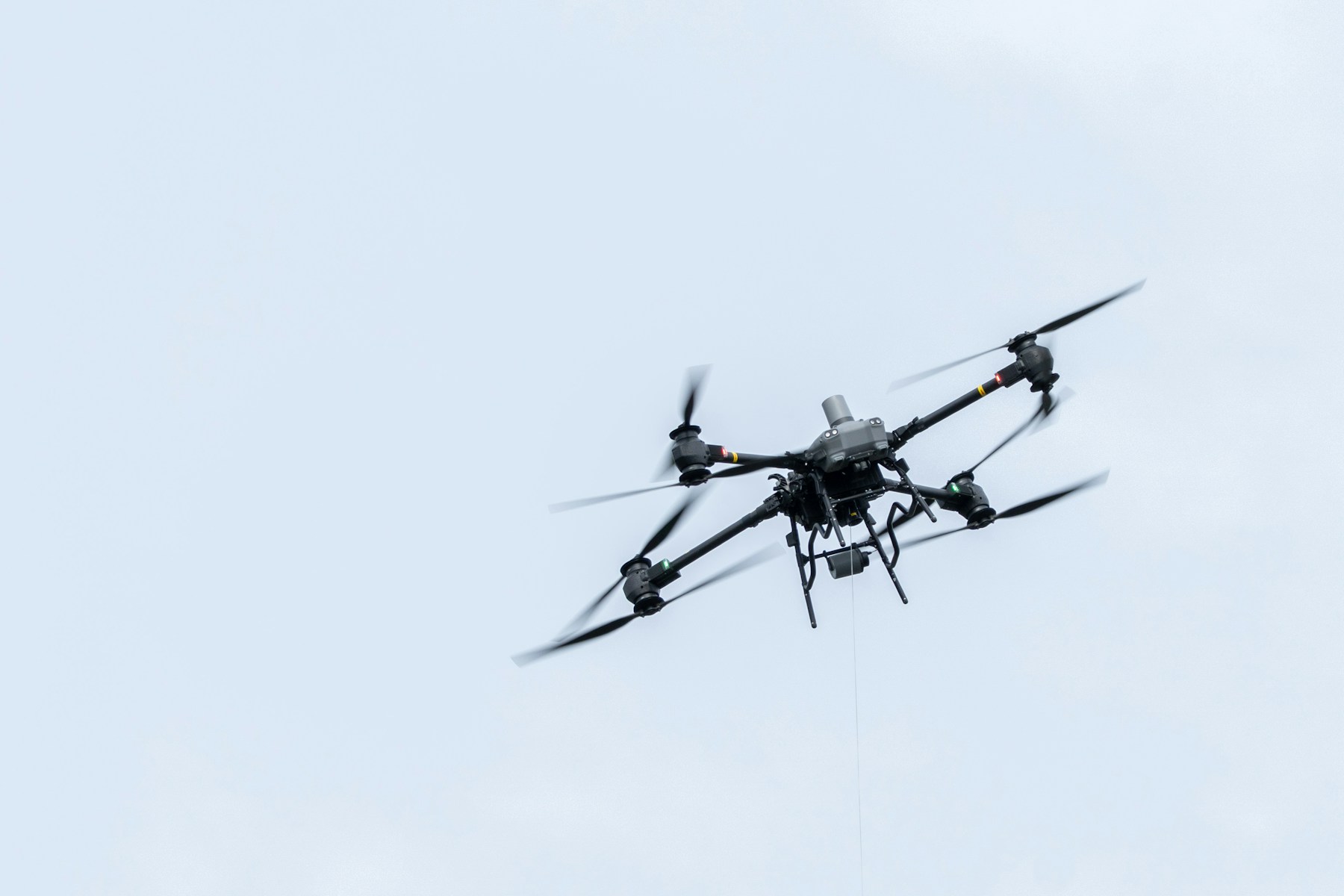
SORA, the Specific Operations Risk Assessment, is the method drone operators use to show that a specific category operation is safe enough to be authorised. It assesses the ground risk (the chance of harming people on the ground) and the air risk (the chance of meeting manned aircraft), combines them into a Specific Assurance and Integrity Level (SAIL) from I to VI, and sets the safety objectives the operator must meet at that level. SORA was developed by JARUS, the Joint Authorities for Rulemaking on Unmanned Systems, and is the EU's accepted means of compliance for operational authorisations. On 29 September 2025, EASA adopted SORA 2.5 in ED Decision 2025/018/R.
This guide explains when you need SORA, how the assessment works step by step, what changed in SORA 2.5, the simpler alternatives, and how to prepare an application.
Table of contents
When you need a SORA
You need an operational authorisation, usually based on a SORA, when an operation goes beyond the open category and is not covered by a standard scenario declaration. Common examples:
Flights beyond visual line of sight (BVLOS), such as long inspections or dock-based operations. See our guide to BVLOS with DJI Dock.
Flights over or close to people in built-up areas, such as roof, facade or construction work in towns.
Flights above 120 m.
Drones of 25 kg or more. See our guide to heavy lift drones.
Dropping or carrying goods, or operations near crowds and events, such as drone light shows.
For an overview of the categories, see our guide to EU drone regulations.
How SORA works, step by step
Describe the operation. The concept of operations (ConOps) sets out the drone, the crew, the area, the airspace, the procedures and the emergency plans.
Assess the ground risk. Work out the initial ground risk class from the drone's size and speed and the population density of the area, then apply mitigations.
Assess the air risk. Determine the initial air risk class from the airspace, then apply strategic mitigations.
Set tactical mitigations. Decide how the operation will detect and avoid other aircraft, depending on the residual air risk.
Determine the SAIL. Combine the final ground and air risk classes into a SAIL from I to VI.
Meet the operational safety objectives. Show compliance with each objective at the robustness required by the SAIL.
Address adjacent areas and airspace. Show that the drone will stay within its operational volume, and how failures are contained.
Compile the safety portfolio. Submit the assessment, operations manual and evidence to the national aviation authority.
Ground risk
Ground risk depends on how many people could be hit and how much harm the drone could do. Larger, faster drones over denser populations score higher. Mitigations can lower the score, for example:
Strategic mitigations. Flying over a controlled ground area where only involved people are present, at times when fewer people are around, or with buffers that keep people out of the area.
Reducing the effects of impact. A parachute or other system that limits the energy of a falling drone.
If the ground risk remains too high, the operation falls outside the specific category and into the certified category.
Air risk
Air risk depends on the airspace: controlled or uncontrolled, near airports, at what height and how busy it is with manned aircraft. The initial air risk class ranges from ARC-a (very low) to ARC-d (high). Strategic mitigations, such as flying at low height near obstacles, at times with little traffic, or in segregated airspace, can lower it. The remaining risk sets the tactical mitigations needed, such as visual observers, traffic information services or detect-and-avoid systems. In Finland, operators can use Fintraffic's services; Flyby Guys announces its flights in Fintraffic Sky, which also shows other air traffic such as rescue helicopters.
SAIL and operational safety objectives
| SAIL | Overall risk | What it means in practice |
|---|---|---|
| I and II | Low | Mostly operator declarations and basic evidence |
| III and IV | Medium | More evidence, independent checks of some objectives, stronger procedures and training |
| V and VI | High | High robustness, often third-party verification of design and operations |
The operational safety objectives cover areas such as the operator's competence and organisation, the drone's design and maintenance, crew training, procedures, and the handling of technical failures, human error and adverse conditions. The higher the SAIL, the higher the level of integrity and assurance required for each objective.
What changed in SORA 2.5
Updated ground risk model. The initial ground risk now uses population density bands together with the drone's size and speed, which makes the assessment more consistent across countries.
Revised mitigations and containment. Ground risk mitigations and containment requirements were reworked.
Clearer structure. The method and its annexes were reorganised to streamline applications and improve mutual recognition between states.
EASA adopted SORA 2.5 through ED Decision 2025/018/R, and national authorities are moving their processes to the new version. Check which version your authority accepts before you start.
Alternatives to a full SORA
| Route | What it is | When to use it |
|---|---|---|
| Standard scenario (STS-01, STS-02) | A declaration for defined operations with class C5 or C6 drones | VLOS over a controlled ground area in populated areas (STS-01), or BVLOS with airspace observers in sparsely populated areas (STS-02) |
| Predefined risk assessment (PDRA) | A ready-made assessment for common operation types | When your operation matches a published PDRA |
| Light UAS operator certificate (LUC) | A certificate that lets an experienced operator authorise some of its own operations | Operators with many varied operations and a mature safety management system |
| Full SORA | A complete risk assessment for your operation | Everything else |
Preparing a SORA application
Start with a clear ConOps. Most delays come from vague descriptions of the area, procedures or emergency plans.
Use real population and airspace data. Authorities publish or accept specific data sources; use the ones yours expects.
Choose mitigations you can prove. Every claimed mitigation needs evidence, such as test results, procedures or training records.
Plan for emergencies. Loss of link, flyaways, battery failures and people entering the area.
Talk to the authority early. A pre-application discussion often saves weeks.
Keep it current. Update the assessment when the drone, area or procedures change.
Insurance is often checked at the same time; see our guide to drone insurance, and check airspace with our no-fly zone guide.
Frequently asked questions
What is SORA for drones?
The Specific Operations Risk Assessment, a method for assessing the ground and air risk of a specific category drone operation and setting the safety measures needed for an operational authorisation.
Who created SORA?
JARUS, the Joint Authorities for Rulemaking on Unmanned Systems. EASA uses it as the accepted means of compliance for operational authorisations in the EU.
What is a SAIL?
The Specific Assurance and Integrity Level, from I to VI, which combines ground and air risk and sets how robust the safety measures must be.
What is the latest version of SORA?
SORA 2.5, adopted by EASA in ED Decision 2025/018/R on 29 September 2025. Check which version your national authority accepts.
Do I always need a full SORA in the specific category?
No. A standard scenario declaration or a predefined risk assessment may cover your operation, and LUC holders can authorise some operations themselves.


