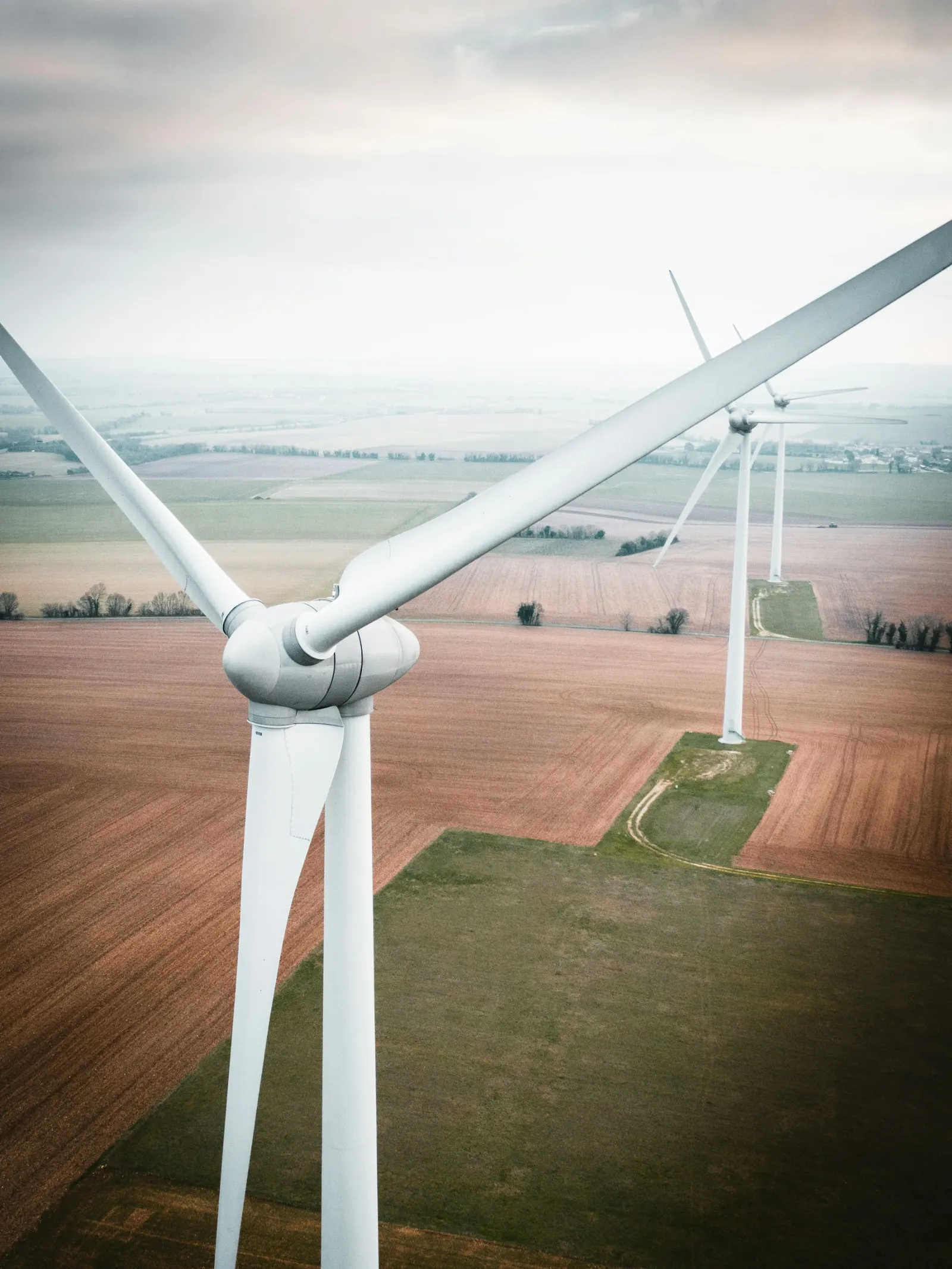
Drones inspect wind turbines by flying a planned path along each blade and the tower with a high-resolution camera, photographing every surface so damage such as leading-edge erosion, cracks and lightning strikes can be found and tracked. They are much faster than rope access: at the BARD Offshore 1 wind farm in the German North Sea, drone inspection took about 25 minutes per turbine, against half a day to a full day by rope. Finding erosion early matters, because a 2024 study in Wind Energy Science modelled annual energy losses of up to 2.9% per turbine from leading-edge erosion.
This guide covers what drones inspect on a turbine, how a blade inspection works, how drones compare with rope access, offshore inspections, the limits and the rules in Europe.
Table of contents
What drones inspect on a wind turbine
| Part | What the drone looks for |
|---|---|
| Blades | Leading-edge erosion, cracks, delamination, lightning damage, damaged receptors and trailing-edge splits |
| Tower | Coating damage, corrosion, oil leaks and dents |
| Nacelle and hub exterior | Cover damage, leaks and loose fittings |
| Foundation and transition piece | Corrosion, coating and access platform condition, especially offshore |
Thermal cameras can add information on some defects under the blade surface in the right conditions. See our thermal inspection service.
How a drone blade inspection works
Stop and position the rotor. The turbine is stopped and the blades set in a fixed position so each one can be flown in turn.
Fly a planned path. The drone flies along each side of every blade at a set distance, often with automated flight paths so each inspection is repeatable.
Tag every image. Photos are linked to the turbine, blade, side and distance from the root, so any defect can be located precisely.
Detect and grade damage. Software flags likely defects, and blade specialists confirm them and grade severity.
Compare over time. Repeat inspections show how damage is progressing, so repairs are planned before small problems become expensive ones.
Drones vs rope access vs ground cameras
| Drone | Rope access | Ground-based camera | |
|---|---|---|---|
| Time per turbine | Under an hour | Half a day or more | Several hours |
| Work at height | None | Technicians on ropes | None |
| Image detail | Close range, all sides of the blade | Very close, hands-on | Limited by distance and angle |
| Can repair on the spot | No | Yes | No |
In practice, drones do the inspection and rope access teams do the repairs, going straight to the defects the drone found.
Why blade damage matters
Blade tips move at high speed, so rain, hail and dust gradually wear away the leading edge. Erosion roughens the blade and reduces how much energy it captures. In the 2024 study by Visbech and colleagues, leading-edge erosion caused an annual energy production loss of up to 2.9% for a single turbine, or 2.7% across a modelled wind farm. Lightning strikes and cracks are more serious still, because unrepaired damage can grow until a blade needs replacing.
Regular drone inspections turn this into planned maintenance: find erosion early, repair it in good weather, and avoid unplanned downtime.
Offshore wind farm inspections
Offshore, access is the biggest cost. Drones are launched from vessels or the turbine platform, so one crew can inspect many turbines in a weather window. At BARD Offshore 1, an inspection campaign covered 80 turbines from the ESVAGT vessel, at about 25 minutes per turbine for blades and tower. Offshore work adds marine weather limits, vessel operations and longer flights, so it needs careful planning and usually a specific category authorisation.
Limitations
The turbine must stop. Inspections need a short shutdown, so they are scheduled for low-wind periods where possible.
Wind and weather. Drones need moderate wind and dry conditions, which can be scarce on exposed sites. See our guide to drone weather limits.
Surface only. Standard cameras see the outside of the blade. Internal inspections need crawlers or technicians inside the blade.
Data and expertise. Images are only useful if blade specialists interpret and grade them consistently.
Rules in Europe and Finland
Onshore wind farms are usually rural, so some inspection flights fit the EU open category. Close work around a large structure, flights near site workers, longer automated missions and offshore operations from vessels usually need the specific category, with an operational authorisation based on a SORA risk assessment. Wind farms can also sit near military or other restricted airspace, so check our no-fly zone guide first.
In Finland, Traficom is the aviation authority, and Flyby Guys announces its flights in Fintraffic Sky, the national drone traffic service. For the wider framework, see our guide to EASA drone regulations. Similar inspection methods are used for power lines and telecom towers.
Frequently asked questions
How long does a drone wind turbine inspection take?
Usually under an hour per turbine. At BARD Offshore 1, blades and tower took about 25 minutes per turbine.
Does the turbine have to stop for a drone inspection?
Yes. The rotor is stopped and the blades positioned so the drone can fly along each one safely.
What damage can drones find on wind turbine blades?
Leading-edge erosion, cracks, delamination, lightning damage, trailing-edge splits and coating damage on the blades and tower.
Are drones replacing rope access technicians?
For inspection, largely yes. Rope access teams still carry out repairs, and drone results tell them exactly where to go.
How often should wind turbine blades be inspected?
Intervals vary by site and turbine. Regular scheduled inspections plus extra checks after lightning strikes or storms are a common pattern, but follow the manufacturer's and insurer's requirements for your turbines.
Need your turbines inspected?
Flyby Guys inspects wind turbines by drone across Europe, with 1,047 turbines inspected in 2026 alone. See our wind turbine inspection service, or contact us to plan an inspection.


