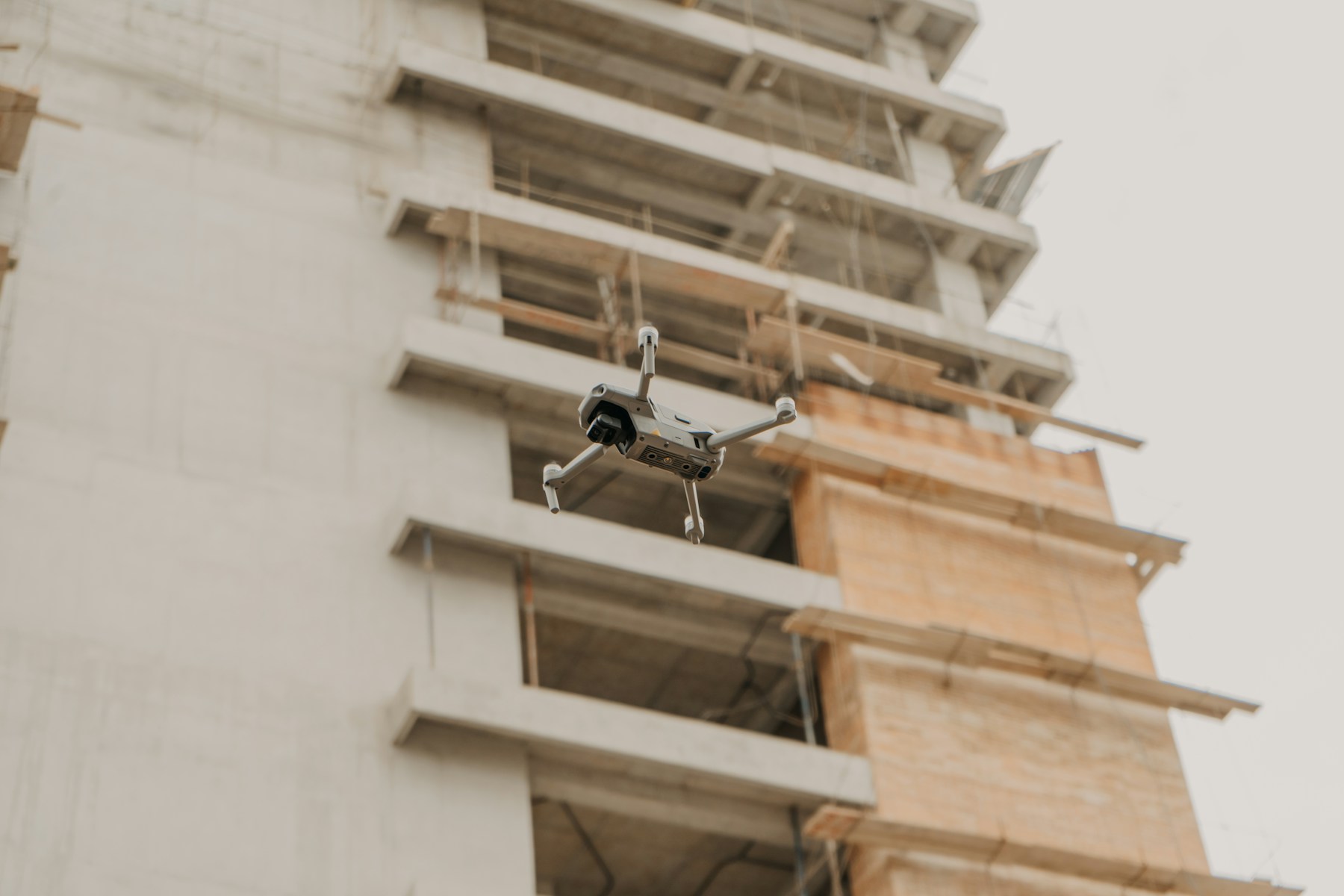
A drone facade inspection uses a drone to photograph a building's walls, windows, balconies and cladding from close range, so a surveyor or engineer can assess their condition without scaffolding, cradles or rope access for the whole elevation. Drones are fastest at the visual survey: they cover every elevation in a few flights, record each defect with a location, and show where hands-on checks are really needed. They do not replace tapping, testing or opening up, but they make that work far more targeted.
Table of contents
Why facades are inspected
Facades weather, move and age. Loose render, cracked stone, failing sealant and corroded fixings can let water in or, at worst, fall to the street. Owners inspect them as part of planned maintenance, before buying or refurbishing a building, after storms and, in some cities, because the law requires it:
New York. Under the Facade Inspection and Safety Program (Local Law 11), buildings taller than six storeys must have their facades inspected every five years. A city-commissioned review published in November 2025 proposed moving to a six-year cycle from 2030, with drones required for taller buildings under a new abbreviated filing option, and a pilot to test where drones could replace hands-on access.
Singapore. Since 1 January 2022, buildings over 13 metres tall must have their facades inspected every seven years once they are more than 20 years old. The Building and Construction Authority allows drones to assist the inspector with the visual inspection.
What a drone can find
Cracks in concrete, render, brick and stone
Spalling and exposed or corroded reinforcement
Loose, missing or damaged cladding panels and tiles
Failed sealant, gaskets and glazing beads
Corroded fixings, brackets, balcony railings and fire escapes
Staining, efflorescence and biological growth that point to water ingress
Damaged gutters, downpipes and flashings
Pair the facade survey with a drone roof inspection to cover the whole building envelope in one visit.
Photos, thermal and 3D models
High-resolution and zoom photos. The core deliverable. Each image is tied to an elevation and a position, so defects can be marked up and found again.
Thermal imaging. Shows heat loss, missing insulation, thermal bridges and areas of trapped moisture. It works best on cold, still days with a clear temperature difference between inside and outside. See our guide to thermal drone inspections.
Orthomosaic elevations and 3D models. Built with photogrammetry, so you can measure defects, count panels and compare conditions at the next survey. Kept up to date, the model becomes part of a digital twin.
How a drone facade inspection works
Scope. Agree the elevations, the level of detail and the deliverables with the surveyor or engineer.
Plan. Check airspace, the operational category, the street below and access to neighbouring land. Notify occupants.
Fly. Systematic vertical or horizontal passes along each elevation at a fixed distance and overlap.
Process. Build elevations or a model, then tag and classify defects.
Report and follow up. The surveyor reviews the images and decides where hands-on inspection, testing or repairs are needed.
A written, repeatable method matters if the results will be compared over time or used for compliance. Our guide to drone inspection quality assurance explains what to include.
Drones vs traditional access
| Drone survey | Scaffold, cradle or rope access | |
|---|---|---|
| Coverage | Every elevation, quickly | Limited by time and access |
| Set-up | Hours | Days to weeks for scaffold |
| Street disruption | Short, controlled exclusion zone | Scaffold or sidewalk sheds, sometimes for months |
| Work at height | None for the surveyor | Yes |
| Hands-on testing | Not possible | Possible |
| Record | Complete, dated, comparable images | Notes and selected photos |
In practice the best approach often combines both: a drone survey of the whole facade, followed by targeted hands-on checks only where the images show a problem.
Rules and privacy
Facade inspections in towns and cities usually fall into the specific category, because the drone flies close to people, roads and buildings. That means an operational authorisation or a standard scenario, backed by a risk assessment such as SORA. Many city centres also sit inside controlled airspace or geographical zones, so check them before every job with our no-fly zone guide.
Close-up photos of a building can capture people through windows and on balconies. Tell occupants in advance, avoid filming into homes and blur or remove people in the images. Singapore's guidance, for example, asks for at least three days' notice to occupants and for images of residents to be anonymised.
Flyby Guys inspects buildings in Finland and across Europe, including after storm damage. See our services for construction site inspections and damage assessment, or contact us. For tall buildings, see our guide to high-rise inspections with drones.
Frequently asked questions
Can a drone inspection replace a hands-on facade inspection?
Not completely. A drone gives a full visual survey. Where the law or the engineer requires hands-on examination, the drone images show where it is needed.
How long does a drone facade inspection take?
A typical apartment block or office building can often be flown in a day. Processing and reporting take longer than the flying.
Can drones fly in strong wind next to buildings?
Wind is gustier near tall buildings, so flights are planned around the forecast and the pilot keeps a safe distance. See our drone weather guide.
Does a drone facade survey need the neighbours' permission?
It depends on the country and where the drone takes off and flies. Take-off and landing need the landowner's agreement, and occupants of the building should always be told.


