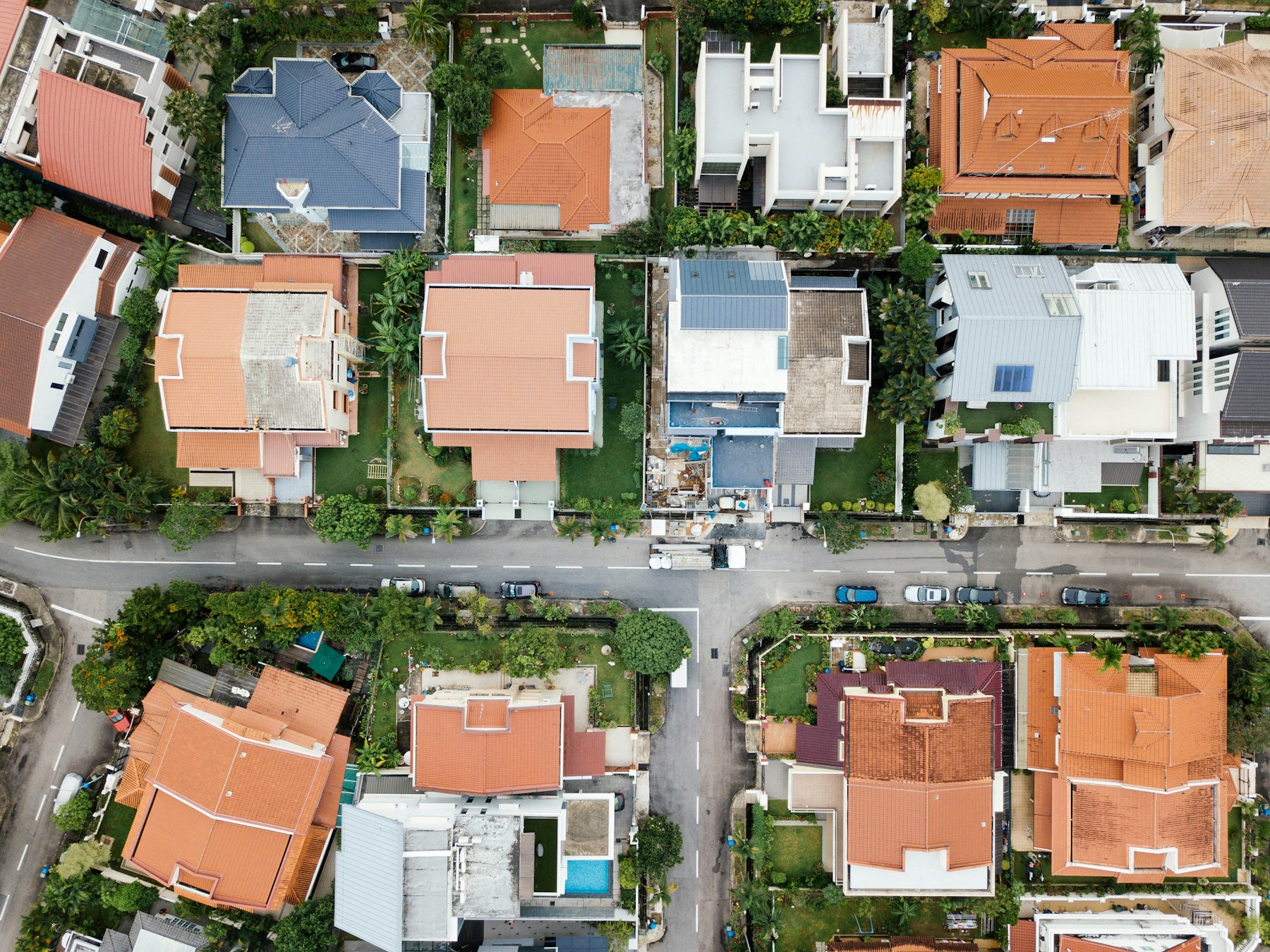
A drone roof inspection photographs the whole roof from above and close up, so surveyors can check coverings, flashings, gutters, chimneys, roof lights and drainage without ladders, scaffolding or anyone walking on the roof. On flat roofs, a thermal survey flown on a clear evening after a sunny day can also show where water has soaked into the insulation. The biggest gain is safety: the UK Health and Safety Executive says roughly half of the deaths and serious injuries from falls in agriculture involve work on fragile roofs.
This guide covers what a drone can and cannot see on a roof, how an inspection is flown, thermal moisture surveys, how drones compare with traditional access, common uses and the rules.
Table of contents
What a drone roof inspection shows
| Roof element | Visual camera | Thermal camera |
|---|---|---|
| Tiles, slates and sheets | Slipped, cracked or missing pieces, corrosion | Limited |
| Flat roof membranes | Splits, blisters, ponding, failed seams | Wet insulation beneath the membrane |
| Flashings and junctions | Lifted or missing flashings, failed sealant | Possible leak paths |
| Gutters and drainage | Blockages, damage, standing water | Limited |
| Chimneys, vents and roof lights | Cracked pointing, damaged covers, broken glazing | Heat loss around openings |
| Whole roof | Overview, measurements from a 3D model | Heat loss and insulation gaps |
How a drone roof inspection works
Brief and permissions. Agree what needs checking, get the owner's permission, check airspace and plan where to take off away from people.
Overview flight. Photos and video of the whole roof and its surroundings.
Close-ups. Detailed images of every slope, junction, gutter and penetration from several angles.
Mapping for larger roofs. A grid flight builds a measurable map or 3D model, so areas and lengths can be measured on screen. Our guide to photogrammetry vs LiDAR explains the options.
Report. Each defect is marked on the roof plan with photos, so repairers know exactly where to go and what to bring.
Thermal moisture surveys on flat roofs
Wet insulation holds heat longer than dry insulation. After a clear, sunny day, the roof warms up; as it cools after dark, wet areas stay warmer and show up on a thermal camera. Thermal camera maker Fluke recommends checking that the day was sunny, the night is clear with little or no wind, and the roof surface is dry and free of snow and debris.
Wet areas often appear as a chequerboard pattern where absorbent insulation boards are saturated, or as a window-frame pattern where water collects at board edges. Other things, such as repairs or wind, can mimic or hide these patterns, so suspected wet areas should be confirmed with core samples, as ASTM C1153 suggests. Winter surveys are harder in the Nordics, because the difference between day and night temperatures is smaller.
Flyby Guys provides thermal inspections with high-resolution thermal cameras.
Drones vs ladders, walking and lifts
| Drone | Ladder or walking the roof | Cherry picker or scaffold | |
|---|---|---|---|
| Work at height | None | Yes, with fall risk | Yes, with controls |
| Setup time | Minutes | Short | Hours to days |
| Coverage | Whole roof, every angle | Limited to safe areas | Limited by reach |
| Record | Full photo set and measurable model | Notes and handheld photos | Notes and handheld photos |
| Hands-on checks | No | Yes | Yes |
What drones cannot do
Feel the roof. Soft decking, loose fixings and spongy areas need hands-on checks.
See underneath. Defects under tiles or inside the roof space need an internal inspection.
Fly in all weather. Rain, strong wind and darkness limit visual flights. See our guide to drone weather limits.
Replace the surveyor. The drone collects the evidence; a roofing professional interprets it.
When to use a drone roof inspection
Planned maintenance. Regular inspections of large or hard-to-reach roofs catch problems before they leak.
After storms. A quick flight shows damage without sending anyone onto a weakened roof, and gives dated evidence for insurers.
Buying, selling or leasing buildings. A full photo record of roof condition supports surveys and negotiations.
New builds and handover. Checks for workmanship before the contractor leaves site. See our guide to drones in construction.
Solar installations. Roof condition before installation, and thermal checks of the panels afterwards. See our guide to drone solar panel inspection.
Rules for roof inspection flights
Roofs are usually in towns, near people and other buildings. In the EU open category, small class-marked drones can fly in A1 or A2 with limits on distance from uninvolved people, but heavier drones in subcategory A3 must stay 150 m from residential, commercial and industrial areas. Many professional roof inspections in built-up areas are therefore flown in the specific category. Respect neighbours' privacy: avoid filming gardens and windows and handle images in line with GDPR. See our guide to EU drone regulations and check airspace with our no-fly zone guide.
Frequently asked questions
Can a drone inspect a roof?
Yes. A drone can photograph every part of a roof up close, and a thermal camera can show heat loss and wet insulation on flat roofs.
Can drones find roof leaks?
They can find the likely causes, such as damaged coverings and flashings, and on flat roofs a thermal survey after dark can show where water has soaked into the insulation. Confirm wet areas with core samples.
When is the best time for a thermal roof survey?
On a clear, calm evening after a sunny day, once the roof starts to cool, with a dry surface free of snow and debris.
Do drone roof inspections replace roofers?
No. The drone gathers evidence safely; roofers and surveyors still interpret it and make hands-on checks and repairs.
Do I need permission to inspect a roof with a drone?
You need the building owner's permission and must follow aviation rules. In built-up areas, professional inspections often need the specific category.


