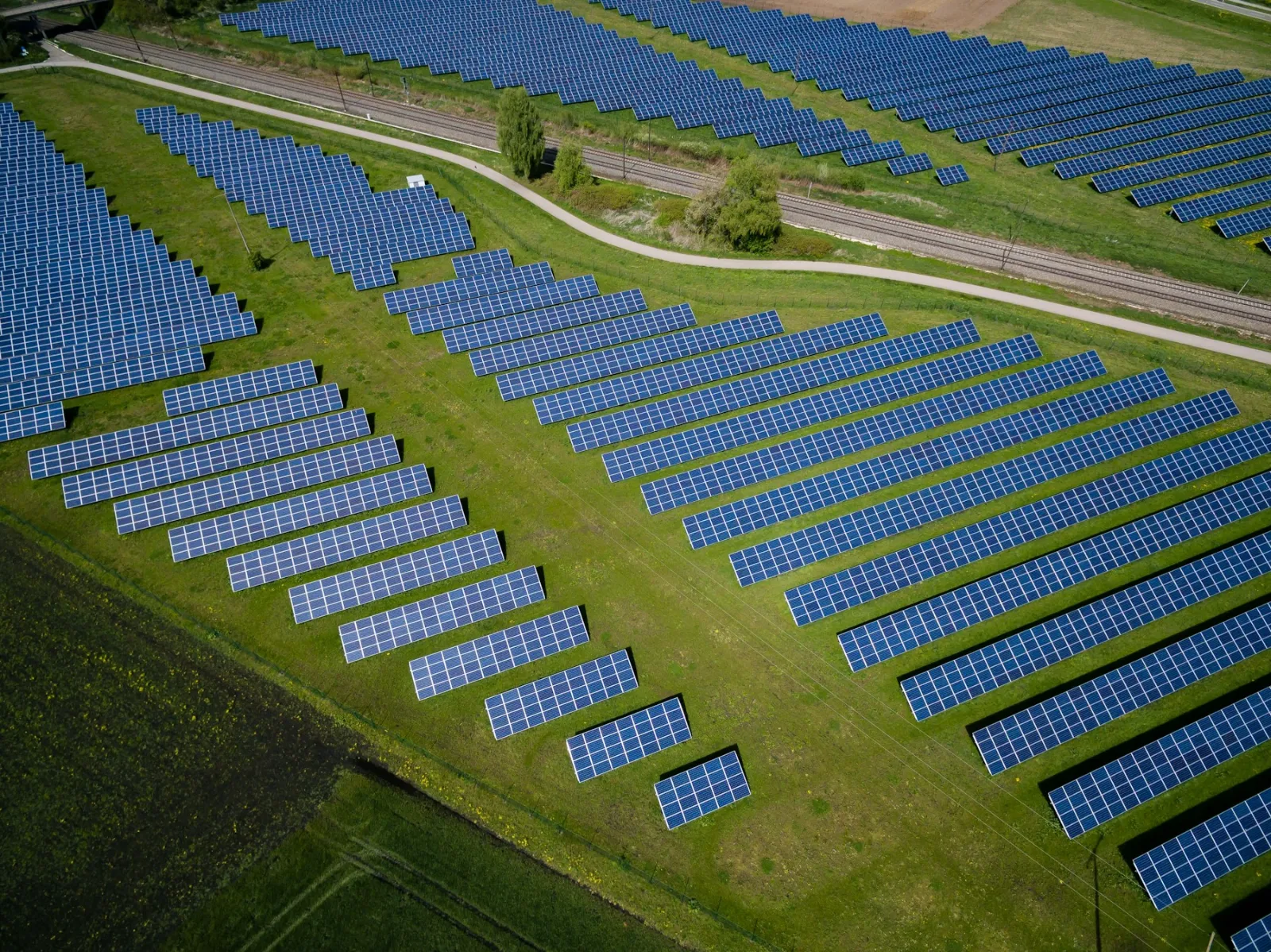
A drone solar inspection flies a thermal camera over a solar plant or roof to find modules, strings and components running hotter than their neighbours, a sign of faults such as cracked cells, failed bypass diodes, soiling or disconnected strings. Those faults add up: Raptor Maps' 2026 Global Solar Report, covering 373 GW of US solar, found an average power loss of 5.08% in 2025, with string issues the biggest single cause. For results that stand up, inspections follow IEC TS 62446-3, which calls for irradiance of at least 600 W/m² and image resolution of 3 cm per pixel or better.
This guide explains what thermal drones find, how an inspection is flown, the conditions you need, how drones compare with ground methods, and the rules for flying over solar sites. Need a solar farm inspected? See our drone solar panel inspection service.
Table of contents
What a thermal drone inspection finds
| What the drone sees | Likely causes |
|---|---|
| A single hot cell | Cracked cell, local shading, soiling or a manufacturing defect |
| A hot strip or third of a module | Failed or active bypass diode |
| A whole module warmer than its neighbours | Module disconnected or not producing |
| A whole string warmer than the rest | String offline, blown fuse or combiner fault |
| Hot connectors or junction boxes | Poor connections that can become a fire risk |
| Patterns across rows | Soiling, vegetation shading or tracker misalignment |
| Visible damage (from the RGB camera) | Broken glass, missing modules, storm or animal damage |
The thermal image shows where to look and the likely cause. Technicians then confirm the fault on the ground before repair.
How a drone solar inspection works
Plan the flight. Load the site layout, set the flight height for the required resolution, and schedule the flight for strong, steady sunshine.
Fly the site. The drone flies a grid over the arrays, capturing thermal and visual images at the same time.
Build maps. Images are stitched into thermal and visual maps of the whole plant.
Detect anomalies. Software flags hot spots and patterns, and specialists classify each one by type and severity.
Report by location. Each fault is tied to its row, string and module, so maintenance crews go straight to it.
Track over time. A baseline at commissioning and repeat inspections show whether problems are spreading.
Flyby Guys provides thermal inspections for solar farms, capturing high-resolution thermal images to find hot spots, faulty cells and damaged components.
Conditions for accurate results
Enough sunlight. IEC TS 62446-3 sets a minimum irradiance of 600 W/m², because faults only show clearly when the modules are working hard. Irradiance should be measured on site or checked against satellite data.
Steady conditions. Passing clouds and gusty wind change module temperatures during the flight and hide or create anomalies.
Resolution. The standard calls for 3 cm per pixel or better, which sets the maximum flight height for a given thermal camera.
Viewing angle. Avoid reflections of the sun and sky in the glass by planning the camera angle and flight direction.
In Finland and the other Nordic countries, the high irradiance requirement limits inspections to the brighter months and the middle of the day. See our guide to drone weather limits.
Drones vs ground inspection
| Drone thermal inspection | Handheld thermal camera | Electrical testing (IV curves) | |
|---|---|---|---|
| Coverage | Whole plant in one visit | Slow, row by row | Selected strings |
| What it shows | Where and what type of fault | Close-up thermal detail | Exact electrical performance |
| Best use | Finding problems across a site | Checking individual findings | Confirming and quantifying faults |
The methods work together: the drone finds the problems, and ground testing confirms them before repair or warranty claims.
Utility-scale and rooftop systems
Utility-scale plants. Large ground-mounted plants benefit most, because walking the site takes days. A drone survey covers the plant in a single visit and gives a full fault map.
Commercial and industrial roofs. Drones avoid sending people onto roofs and can check the roof itself at the same time. See our guide to roof inspections with drones.
Commissioning and handover. A thermal inspection at handover gives a baseline and catches installation defects while the installer is still responsible.
Rules for flying over solar sites
Solar farms are often in rural areas, so some inspections fit the EU open category. Rooftop systems in towns, sites near people and industrial areas, and large automated surveys usually need the specific category with an operational authorisation; in subcategory A3 you must stay 150 m from residential, commercial and industrial areas. See our guide to EU drone regulations and check airspace with our no-fly zone guide.
Frequently asked questions
What does a thermal drone find on solar panels?
Hot spots from cracked cells, failed bypass diodes, disconnected modules and strings, hot connectors, soiling and shading. Visual images add broken glass and physical damage.
When should a drone solar inspection be flown?
In strong, steady sunshine, with irradiance of at least 600 W/m² under IEC TS 62446-3, usually around the middle of the day.
How often should a solar plant be inspected?
A baseline at commissioning, then regular inspections, often yearly, plus checks after storms or unexplained drops in output. Follow your warranty and O&M contract requirements.
Can drones inspect rooftop solar panels?
Yes. Drones avoid work at height and can check the roof at the same time, but urban rooftops usually need the specific category.
How much power do solar faults cost?
Raptor Maps found an average power loss of 5.08% across 373 GW of US solar in 2025, worth up to $5,070 per MW per year in revenue.


