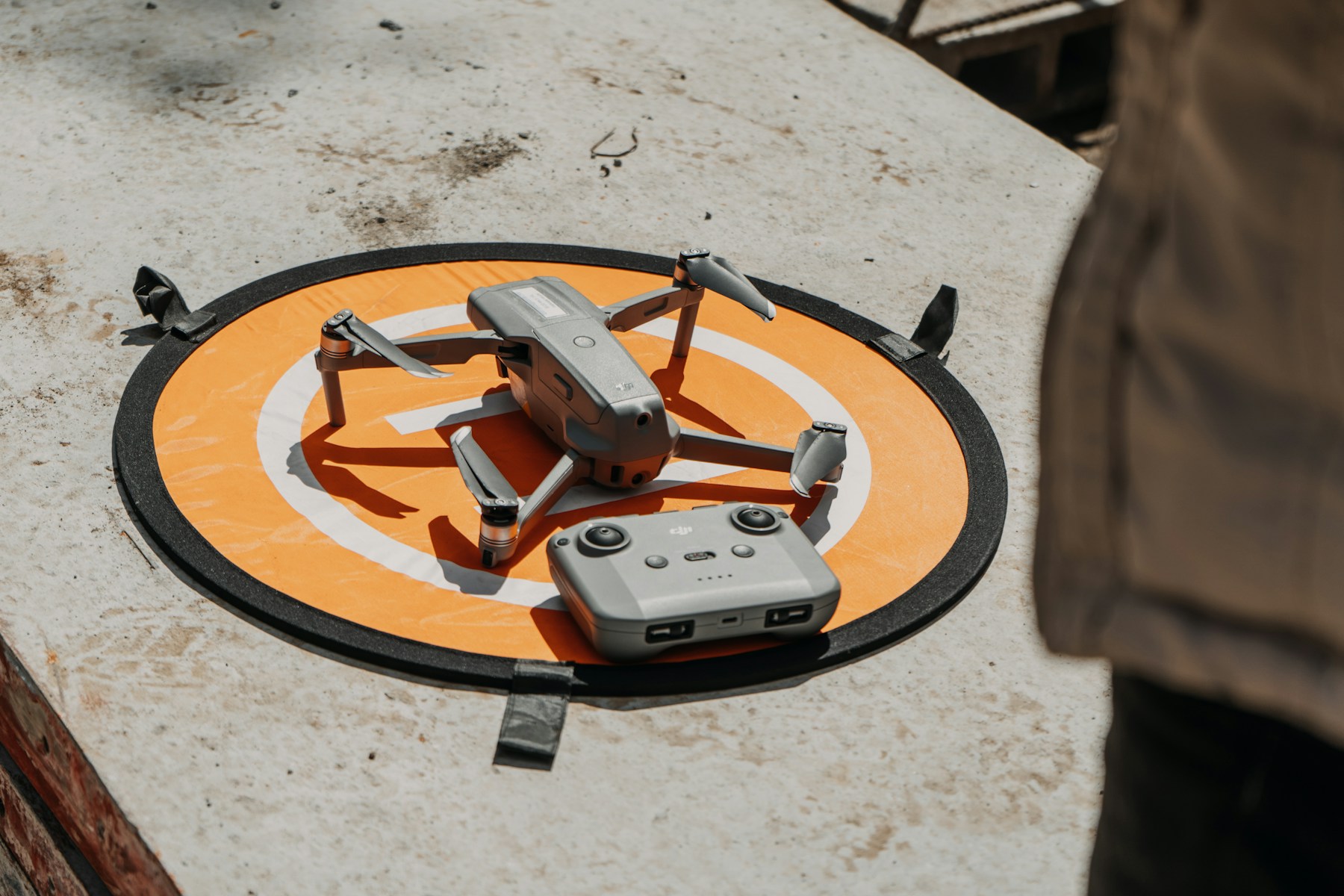
A drone preflight checklist covers five things before every flight: the paperwork, the airspace, the weather, the site and the aircraft. The rules require it. In the US, Part 107.49 requires the remote pilot to assess the environment, brief the crew, check the control link and power, and secure any payload before flight. In the EU and UK, the remote pilot must check restricted areas, the operating environment and that the drone is safe to fly. A written checklist is the simplest way to show you did.
This is the checklist structure we recommend for professional operations, split into what to do before the day, on site and just before take-off.
Table of contents
Before the day
Documents. Check that pilot competency, operator registration, insurance and any operational authorisation are valid for this job. In the UK, that means a Flyer ID and Operator ID at minimum; see our guide to Flyer ID vs Operator ID. For insurance, see our guide to drone insurance.
Rules for the location. Confirm which category the flight falls into and whether the job needs an authorisation. For work abroad, check the national rules first; our Drone Assistant gives cited answers for many countries.
Airspace. Check the official zone map for the whole operating area, plus temporary restrictions and NOTAMs. Get any permissions in writing. Our no-fly zone guide lists the official sources by country.
Weather forecast. Wind and gusts at flight altitude, precipitation, temperature, visibility and the Kp index. Compare them with the drone's limits and your own. See our guide to drone weather limits.
Site plan. Review the site on a map: take-off and landing points, obstacles, people and roads, and an emergency landing area.
Permissions on the ground. Landowner consent, and agreement with the client on access, safety rules and who is responsible on site.
Batteries and kit. Charge flight and controller batteries, and pack spare propellers, memory cards and any payloads.
On site
Walk the site. Look for obstacles that may not be on the map: cranes, cables, trees, new structures.
People and property. Identify uninvolved people, set up a controlled area if needed, and brief anyone who will be near the flight.
Take-off point. Choose flat, open ground with a clear view of the sky, away from metal structures that can affect the compass and GPS.
Weather on the day. Check wind at ground level, cloud, visibility and any signs of rain, fog or icing.
Crew briefing. Agree roles (pilot, observer, payload operator), the flight plan, communication, emergency procedures and the go or no-go decision.
Aircraft and equipment
Airframe. No cracks or loose parts; arms locked; landing gear secure.
Propellers. No chips, cracks or bends; correctly fitted and locked.
Batteries. Fully charged, no swelling or damage, at a suitable temperature, firmly seated.
Camera, gimbal and sensors. Lenses and obstacle sensors clean; gimbal moving freely; memory card inserted with space.
Payload. Secure, balanced and within the drone's weight limit.
Controller and app. Controller and phone or tablet charged; firmware consistent across aircraft, controller and batteries; maps cached if coverage is poor.
Remote ID. Active and broadcasting where required.
Deeper checks belong in your maintenance routine; see our drone maintenance checklist.
Just before take-off
Power on the controller first, then the aircraft, as the manufacturer recommends.
Check the control link and video feed are strong and stable.
Wait for a strong satellite signal and confirm the home point has been recorded. See our guide to drone GPS requirements.
Calibrate the compass if the app asks.
Set failsafes: return-to-home height above the tallest obstacle, low-battery behaviour and lost-link action.
Check flight limits in the app: maximum height and distance for this site.
Clear the area and announce take-off to the crew.
Straight after take-off
Hover at a few metres for 10 to 20 seconds. Check that the drone holds position, responds normally to the controls and shows no warnings, and that battery voltage is stable. If anything is unusual, land and investigate before continuing.
What the rules require
US. Under 14 CFR 107.49, before flight the remote pilot in command must:
assess the operating environment, including local weather, airspace and flight restrictions, people and property on the ground, and other ground hazards
brief everyone directly involved on conditions, emergency procedures, roles and hazards
check that the control link between the ground station and the drone is working
check there is enough power for the planned flight
make sure any attached or carried object is secure and does not affect the drone's controllability
EU and UK. In the open category (UAS.OPEN.060), before starting, the remote pilot must:
hold the right competency and carry proof of it
have up-to-date information on restricted areas
check the operating environment for obstacles and uninvolved people
confirm the drone is safe to fly and that Remote ID is active where required
keep any extra payload within the drone's maximum takeoff mass
In the specific category, the operator's procedures in the operations manual set the checks, often based on a SORA assessment.
Frequently asked questions
What should be on a drone preflight checklist?
Documents and authorisations, airspace and restrictions, weather, site hazards and people, the aircraft's condition, batteries, control link, satellite signal, failsafe settings and a crew briefing.
Is a preflight check a legal requirement?
Yes. In the US, Part 107.49 sets out preflight actions. In the EU and UK, UAS.OPEN.060 requires the remote pilot to check restricted areas, the environment and the drone before flying.
What is the FAA preflight checklist?
The FAA does not publish one single mandatory form, but 14 CFR 107.49 lists what must be checked: the operating environment, crew briefing, control link, power and secure payload.
How long does a preflight check take?
The aircraft checks take a few minutes. Airspace, weather and site planning take longer and are best done the day before.
Should I keep a record of preflight checks?
Yes, for professional work. A signed or app-based checklist shows the flight was planned and checked, which helps with clients, insurers and authorities.


