To work out construction drone ROI, compare the full cost of each survey or inspection done the traditional way (crew time, access equipment, delays and safety measures) with the cost of doing it by drone, then multiply by how often you need it over the project. Drones pay off fastest on work that is repeated, such as monthly surveys, weekly progress mapping and inspections at height, and on large or hard-to-reach sites. The bigger savings are often indirect: errors caught earlier and less work at height. Research by the UK's Get It Right Initiative estimated that avoidable errors cost around 21% of project turnover once all direct and indirect costs are counted.
This guide sets out the costs to compare, where the savings come from, a worked example, in-house vs outsourced drones and when drones do not pay off.
Table of contents
The ROI formula
ROI (%) = (savings and benefits minus drone costs) divided by drone costs, multiplied by 100.
Work it out per task first, for example one survey, one roof inspection or one week of progress mapping, then scale it by the number of times the task is repeated during the project. Count only benefits you can put a reasonable figure on, and list the others separately.
Costs to compare
| Traditional methods | Drone | |
|---|---|---|
| Labour | Survey crew or inspectors on site, often for days | Pilot, plus a spotter where needed, usually for hours |
| Access | Scaffolding, cherry pickers, rope access, traffic management | None for most tasks |
| Safety | Fall protection, permits, exclusion zones, supervision | Flight planning, take-off area, airspace permissions |
| Disruption | Work paused while crews or lifts are in the way | Little or none, as flights work around site activity |
| Processing and reporting | Drawings and notes from field data | Maps, models and reports from flight data, often within a day or two |
| Equipment | Survey instruments, access hire | Drone, sensors and software (in-house), or service fees (outsourced) |
Where the savings come from
Faster surveys. A drone maps a large site in one flight instead of days of ground surveying, and covers every stockpile at once. In one published quarry study, drone photogrammetry measured a stockpile within 2.6% of its actual volume.
No access equipment. Roofs, facades and structures can be inspected without scaffolding or lifts. See our guide to drone roof inspections.
Fewer errors and less rework. Regular maps and models show deviations from the design while they are still cheap to fix.
Less work at height. Falls from height are the main cause of fatal accidents in construction, which accounted for 23% of fatal accidents at work in the EU in 2023, according to EU-OSHA.
Better records. Dated aerial images support progress claims, handovers and disputes.
Remote decisions. Owners and managers can check progress without travelling to site.
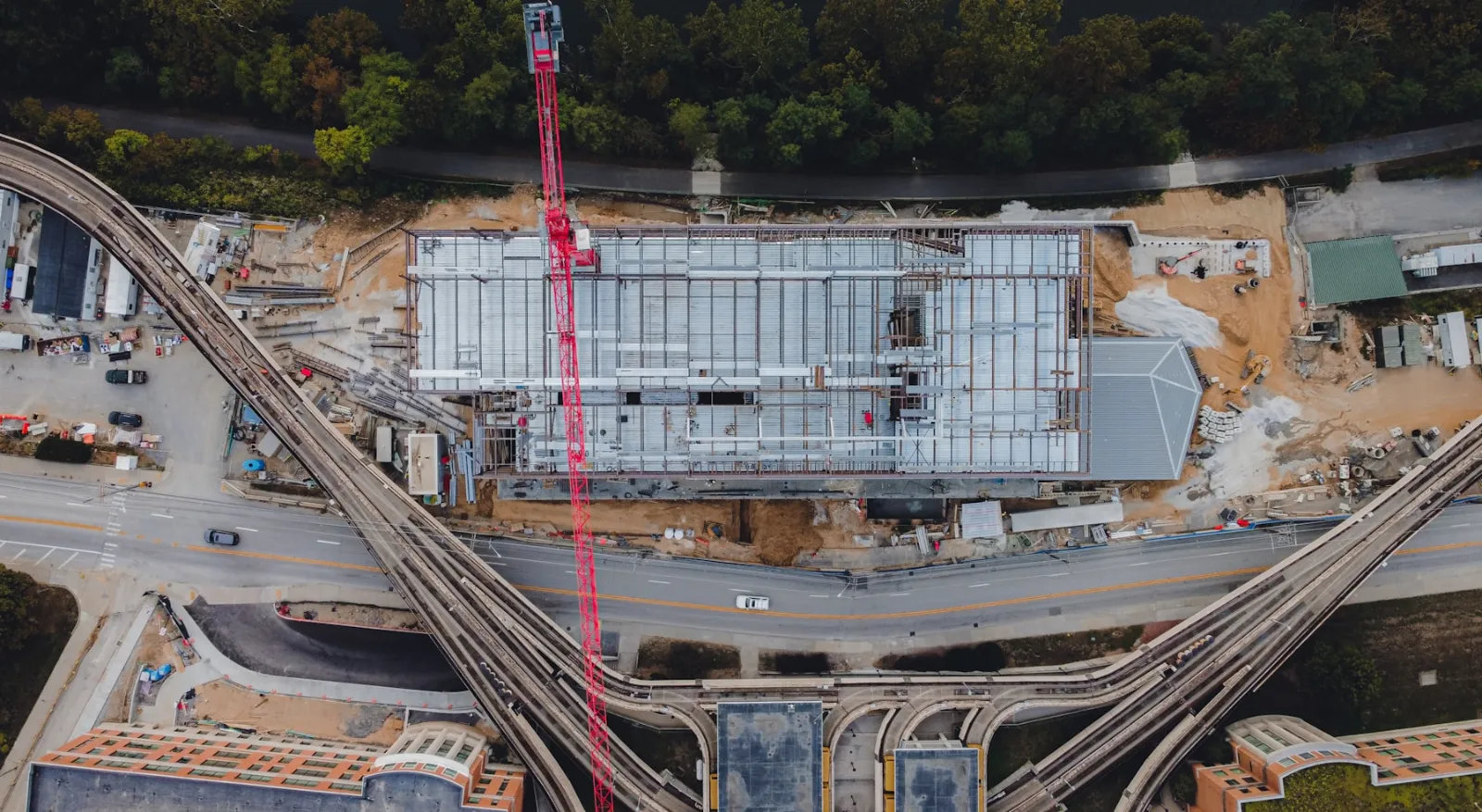
For Winthrop's 48 MW data centre build in Finland, Flyby Guys flew weekly mapping flights with RTK, panoramas and perimeter video, shared through DroneDeploy, so the whole team could follow progress from anywhere. See our guide to drones in construction.
Worked example: monthly site surveys
The figures below are illustrative. Replace them with your own rates and quantities.
| Item | Ground survey | Drone survey |
|---|---|---|
| Time on site per survey | 2 days, 2-person crew | Half a day, 1 pilot |
| Cost per survey | EUR 2,400 | EUR 1,500 including processing |
| Surveys per year | 12 | 12 |
| Annual cost | EUR 28,800 | EUR 18,000 |
| Direct saving | EUR 10,800 |
Direct ROI = (28,800 minus 18,000) divided by 18,000, multiplied by 100 = 60%. That excludes indirect benefits, such as finding a level error weeks earlier or avoiding a day of work paused for surveyors, which are often worth more than the direct saving on a large project.
In-house vs outsourced drones
| In-house | Outsourced service | |
|---|---|---|
| Upfront cost | Drones, sensors, software, training | None |
| Ongoing cost | Pilot time, insurance, maintenance, software subscriptions | Per flight or per project |
| Best for | Frequent, simple flights on your own sites | Specialist work, occasional needs, complex permissions |
| Permissions and risk | Your organisation holds the authorisations and insurance | The provider holds them |
Many contractors combine both: routine progress flights in-house and specialist work, such as thermal inspections, urban flights or BVLOS operations, from a provider. Read about the cover you need in our guide to drone insurance. If you are building an in-house team, our drone consultancy covers setting up operations, pilot training and regulatory support.
When drones do not pay off
Small, one-off jobs. A single quick check on a small site may cost more to plan than to do by hand.
Hands-on work. Tasks that need touching, testing or fixing still need people on site.
Data no one uses. Maps and models only save money if they feed into decisions.
Difficult airspace. Sites near airports or in dense city centres can need long permission processes. Check our no-fly zone guide.
Weather-limited schedules. Frequent wind or rain can delay flights. See our guide to drone weather limits.
How to measure ROI on your project
Pick one repeated task. Monthly surveys, weekly progress mapping or roof inspections.
Record today's costs. Crew time, access hire, delays and safety measures for that task.
Run drone flights for a set period. Three months is often enough to compare.
Track time to data and issues found. How quickly results arrived and what problems were caught earlier.
Calculate and decide. Use the formula above, then scale to other tasks or sites.
Frequently asked questions
How do you calculate drone ROI in construction?
Subtract the drone costs from the savings and benefits, divide by the drone costs and multiply by 100. Work it out per task and multiply by how often the task is repeated.
Are drones cheaper than traditional surveys?
Usually for repeated surveys of medium and large sites, because a drone covers the site in hours instead of days. For small, one-off jobs the difference can be small.
What gives the biggest return?
Repeated tasks, such as monthly surveys, weekly progress mapping and inspections that would otherwise need scaffolding or lifts, plus errors caught early.
Should we buy drones or hire a provider?
Buy for frequent, simple flights on your own sites; hire for specialist, occasional or complex work. Many contractors do both.
Do drones improve safety on construction sites?
Yes, by reducing work at height and time spent near hazards, such as roof edges, unstable ground and moving machinery.


