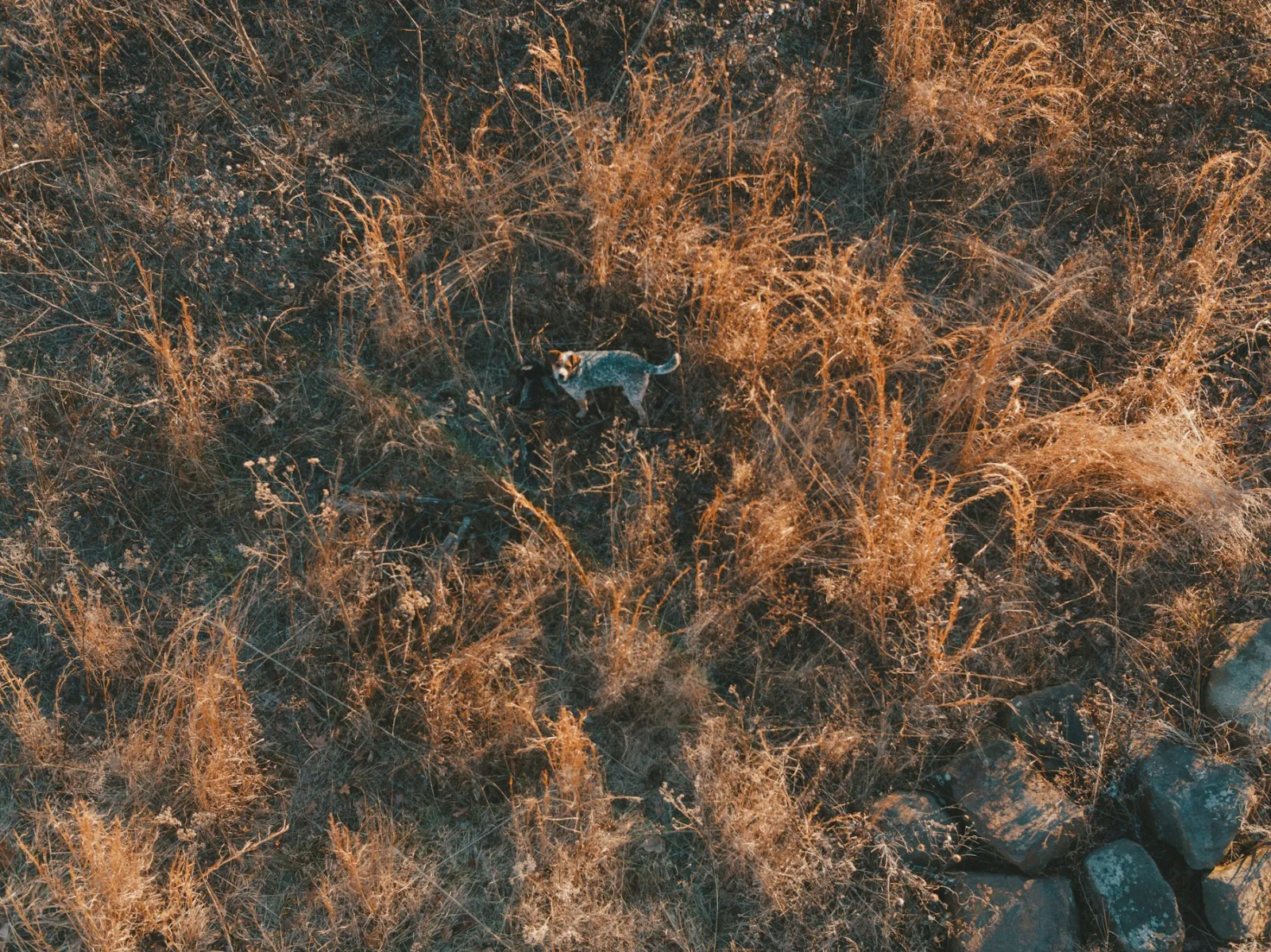
A thermal drone finds a missing dog by detecting its body heat against cooler ground, so it can scan fields, forest edges and rough ground far faster than people on foot. It works best at night, early in the morning and in cold weather, when the contrast between a warm dog and its surroundings is greatest. Thermal cameras cannot see through buildings, thick tree canopy or dense undergrowth, so a drone search narrows the area and guides people on the ground rather than replacing them. Once the dog is spotted, the drone keeps watch from a distance while the owner or a recovery team approaches calmly.
This guide explains how thermal drones detect dogs, the best conditions, how a search is flown, the equipment used, the limits, and how owners can prepare.
Table of contents
How thermal drones detect missing dogs
A thermal camera measures infrared radiation, which every warm object gives off. A dog's normal body temperature is around 38 to 39 °C, so on a cool night it shows up as a bright shape against darker ground. The pilot and an observer watch the live thermal feed and look for a heat signature of the right size and shape, then switch to the zoom camera to confirm what it is.
How well a dog shows up depends on what is around it:
| Where the dog is | How it shows on thermal |
|---|---|
| Open field, short grass, snow | Clear, strong signature |
| Tall grass, low bushes | Often visible, sometimes partly hidden |
| Under sparse trees | Visible through gaps in the canopy |
| Under dense conifers or thick undergrowth | Usually hidden |
| Inside sheds, culverts or buildings | Not visible |
Flying higher covers more ground but makes the dog smaller in the image. Searches usually start higher to sweep the area, then drop lower to check anything promising. For more on how the cameras work, see our guide to thermal drones.
Best conditions for thermal drone searches
Time of day. Night and the hours before sunrise are best, when the ground has cooled. In the late afternoon, sun-warmed rocks, roads and roofs can look like animals.
Season. Autumn, winter and spring give the most contrast. Snow makes a dog stand out clearly. Hot summer days are the hardest, so search at night.
Weather. Overcast skies reduce solar heating. Rain, snowfall, fog and strong wind reduce image quality and can stop flights altogether. See our guide to drone weather limits.
Timing after the dog goes missing. The sooner the better. In the first day the dog is more likely to be close to where it was last seen.
Step-by-step thermal drone search
Gather information. Where and when the dog was last seen, any sightings since, its size, colour, temperament and health.
Define the search area. Timid dogs often hide close to where they went missing; confident dogs may travel much further. Sightings and terrain shape the area.
Check airspace and plan. Confirm the area can be flown, choose safe take-off points and plan for darkness. Check zones with our no-fly zone guide.
Sweep the area. Fly systematic lines, with overlap between passes so nothing is missed, while an observer watches the thermal feed.
Check each heat signature. Zoom in and use the visual camera. Deer, foxes, hares, cats and warm objects are common false alarms.
Guide the recovery. When the dog is found, keep the drone at a distance so it does not frighten the dog, and guide the owner in by radio or phone. A scared dog may run from strangers but come to its owner.
Record what was searched. Even without a find, knowing which areas are clear helps focus the next search.
Equipment
Thermal camera. 640 x 512 pixels is the common resolution for professional search drones. Higher resolution lets the drone fly higher and still recognise a dog.
Zoom camera. Confirms what a heat signature is without flying close and scaring the animal.
Spotlight or loudspeaker. Some search drones carry them, though with a frightened dog quiet observation usually works better.
Spare batteries. Flight times are typically 30 to 45 minutes per battery, so searches run in cycles.
Large screen and radios. So observers can watch the feed and coordinate people on the ground.
The same equipment is used by rescue services to find missing people. See our guide to drones for search and rescue.
What affects success, and the limits
Cover. Dense forest, buildings and undergrowth hide heat. This is the biggest limit.
Other animals. In rural areas, wildlife produces many heat signatures, and each one has to be checked.
A moving dog. A dog that keeps travelling can leave the search area between flights.
Weather and daylight. Warm days, rain and wind reduce the chances.
Airspace. Near airports and in some urban areas, flights may be restricted or need permission.
Catching the dog. Finding it is often the easier part. A frightened dog may need time, food, a familiar person and sometimes a humane trap.
How owners can prepare
Act quickly. Call for help early rather than after several days.
Share details. Recent photos, size, colour, collar or harness, temperament and any health problems.
Map the sightings. Times and places of every sighting since the dog went missing.
Arrange access. Ask neighbours and landowners for permission to search on foot if the dog is spotted on their land.
Be available. The owner is usually the best person to approach the dog once it is found.
Do not chase. If the dog is spotted, sit down, stay calm and let it come to you.
Other search methods to combine with drones
Ground searches of sheds, garages, culverts and dense cover the drone cannot see.
Trail cameras at feeding spots, to confirm the dog is in an area.
Familiar scents, such as the owner's clothing or the dog's bedding, near where it was last seen.
Local groups and social media, to gather sightings that focus the drone search.
Contacting vets, shelters and the authorities in case the dog has been found, and making sure microchip details are up to date.
Rules for drone searches
Searching for a pet is a normal drone flight, so the usual rules apply. In the EU, pilots must be registered, stay within visual line of sight in the open category, keep below 120 m and keep a safe distance from people. Night flights are allowed in the open category, but class-marked drones must have their green flashing light switched on. Searches near airports or in controlled airspace need permission. See our guide to EU drone regulations.
Frequently asked questions
Can a drone find a lost dog?
Yes. A thermal drone can spot a dog's body heat across open and lightly wooded ground, especially at night and in cold weather. It cannot see through buildings or dense forest.
When is the best time to search with a thermal drone?
At night or before sunrise, when the ground is coolest. Cold, overcast weather and snow also help.
Can thermal cameras see through trees?
Not through the trees themselves. They can see through gaps in sparse canopy, but dense conifers and thick undergrowth usually hide a dog.
Will the drone scare my dog?
It can if it flies too close. Search drones keep their distance and use zoom cameras so the dog is not frightened away.
What should I do when the drone finds my dog?
Approach calmly, avoid chasing, sit or crouch and let the dog come to you. Food and a familiar voice help.


